Silicone Compounds (VMQ)
A pure silicone rubber compound with high chemical inertness, biocompatibility and stability at extreme temperatures and against ageing. It is the choice for applications where other elastomers reach their physical limits of temperature or compatibility.
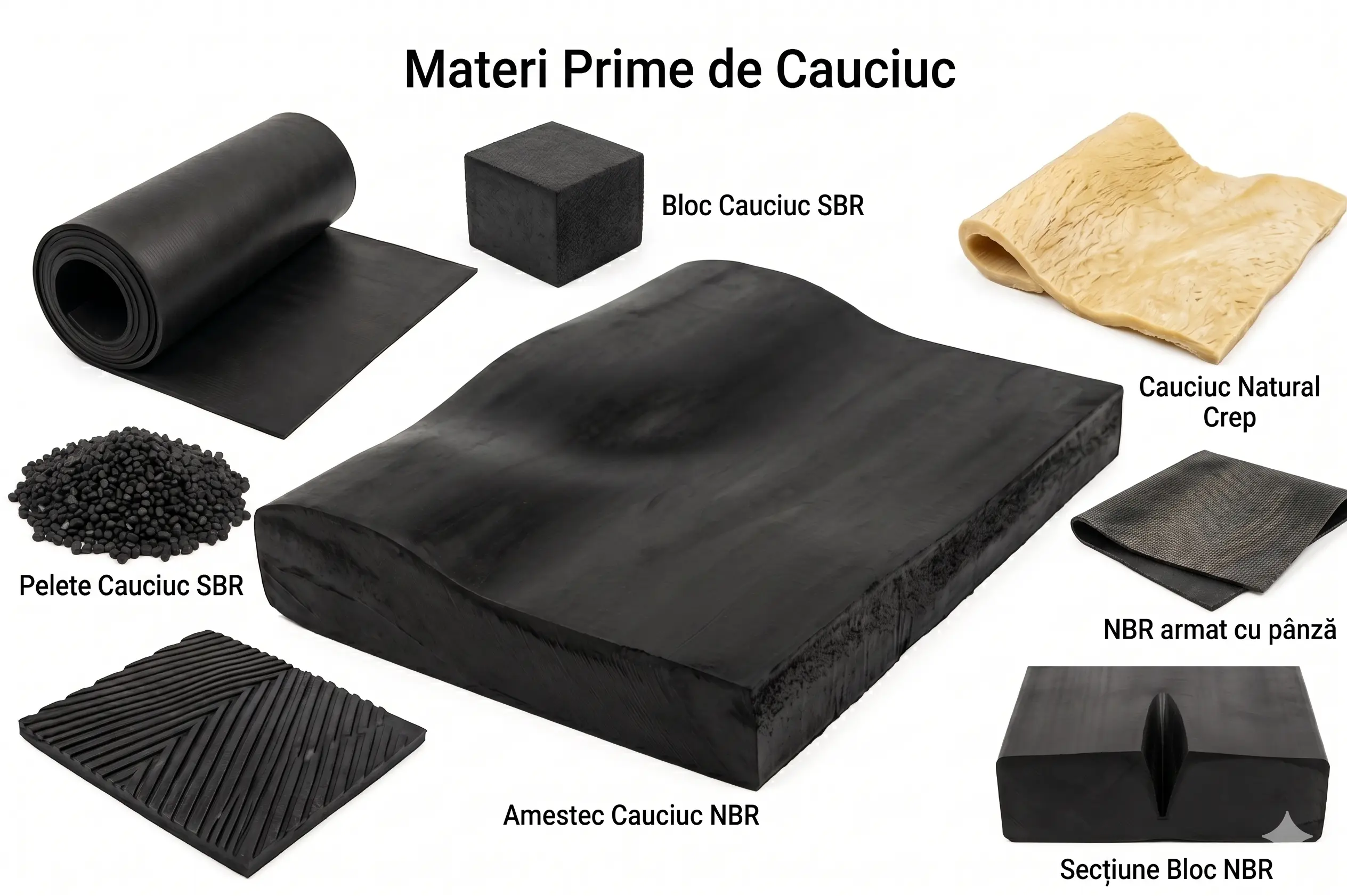
Technical Specifications
Indicative values, typical for silicone compounds. Exact parameters are confirmed on the recipe approved in Geola Prod's in-house laboratory.
| Parameter | Value |
| Elastomer base | VMQ / PVMQ |
| Shore A hardness | 20–80 |
| Working temperature | -60°C … +230°C |
| Tensile strength | ≥ 5 MPa |
| Elongation at break | ≥ 150% |
| Density (indicative) | 1.15–1.60 g/cm³ |
| Ozone/UV/weathering resistance | Excellent |
| Oil resistance | Moderate |
| Reference standards | SR ISO 37, ISO 48-4, ISO 1431 |
Applications
Very High Temperature Equipment
Seals and technical parts for equipment exposed to intense heat or thermal sterilization cycles.
Food Industry
Components requiring chemical inertness and thermal resistance; food-contact compliance is established per recipe, on request.
Electrical & Electronic
Parts requiring thermal insulation and long-term stability, in environments with large temperature variations.
Frequently Asked Questions
What advantages does silicone rubber (VMQ) have over other elastomers?
Silicone is chemically inert, biocompatible and stable across a very wide thermal range, typically -60°C to +230°C, with slow ageing and excellent resistance to ozone and UV.
Is silicone rubber safe for food contact?
Certain silicone recipes are suitable for food contact, but compliance depends strictly on the formulation and raw materials used. Compliance of a specific recipe for food contact is confirmed separately, on request, and is not implicit for all silicone compounds.
How does silicone's mechanical strength compare to NBR or EPDM?
Tensile and abrasion resistance are generally lower than NBR or EPDM. Silicone is chosen for extreme temperature and chemical inertness, not for intense mechanical demands.
Can you produce colored silicone compounds or ones with special properties?
Yes — we develop custom silicone recipes, including colored variants, depending on the hardness, temperature and properties required by the application.
Other Rubber Compounds
Request a Quote for Silicone Compound
Specify the application, the temperature range and the hardness required — we will formulate the optimum recipe for you.